What’s on the Ballot?
Learn about the candidates, offices and issues on your ballot
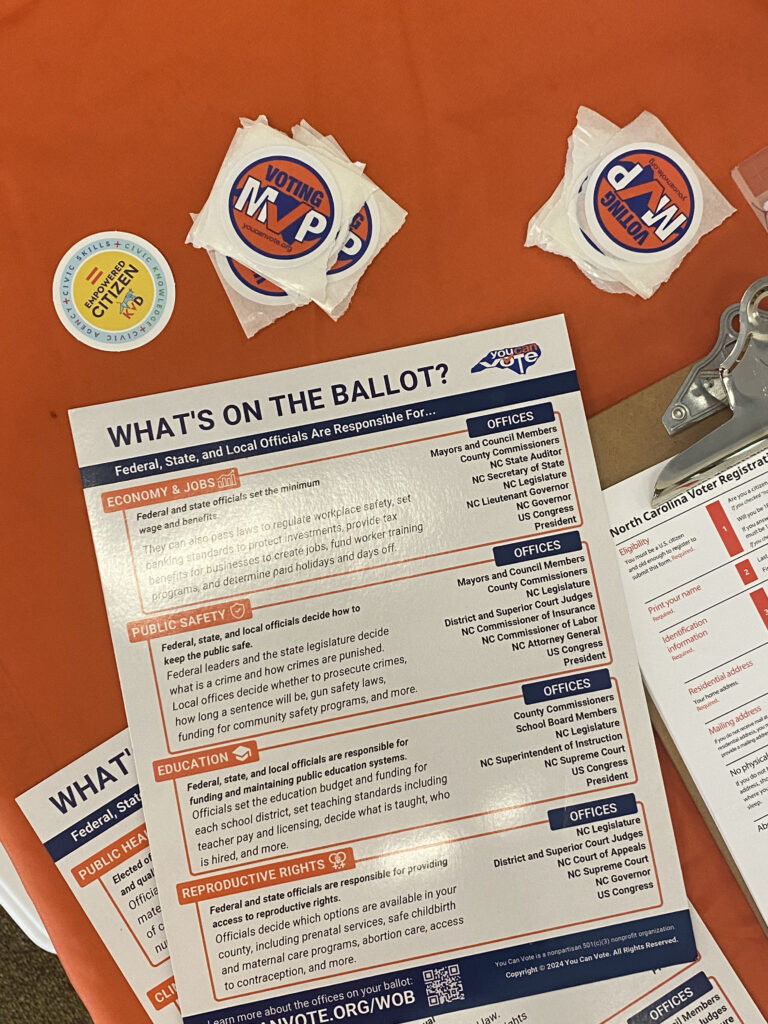
Ballot Builder
You can vote with confidence and insight thanks to Ballot Builder, our free, nonpartisan elections research guide.
- Learn about the candidates and offices on your ballot.
- Select your preferred candidates to create your customized sample ballot.
- Email or print it and bring it with you into the voting booth.
Make sure to create an account! Creating an account let’s us email you when new candidate research is available.
Offices on the ballot
Federal offices
US Senate
The US Senate drafts federal laws, approves presidential appointments and Supreme Court nominations, oversees the federal budget, and has the power to conduct impeachment trials.
US House of Representatives
The US House of Representatives makes federal laws including the budget and rules for citizenship and can declare war and regulate the armed services. Creates and oversees federal government agencies.
State offices
General Assembly
The General Assembly, North Carolina’s legislature, writes state laws and the budget which funds public schools, public health, and the State Board of Elections. They draw voting maps and write election laws for our state. They decide what is a crime and how it should be punished and make rules on how courts, prisons, and jails are managed.
NC Supreme Court
The Supreme Court of North Carolina makes rules for NC appellate courts, decides cases from lower courts when someone claims that the law was misapplied, and decides appeals in death penalty cases.
NC Court of Appeals
The Court of Appeals reviews trial court decisions that are appealed. Has judicial review power over the Governor and NC Legislature and can interpret or overturn state laws. Their decisions become law.
District and Superior Court Judges
District and Superior Court Judges decide disputes on issues that include money, personal injury (including murder), divorce, child custody, and adoptions. They decide criminal cases, who goes to jail and for how long, if someone receives probation, and whether someone must pay back a victim or do community service.
Local offices
County Commissioners
County Commissioners pass the budget that funds services including the County Board of Elections, public health, safety, law enforcement, human services, public schools, and community colleges. They fund salaries for county workers and decide the timing and amount of local bonds. The Board appoints county positions including the tax supervisor, tax collector, and county attorney.
District Attorney
Decides whether or not to bring criminal charges. One in each county, prosecutes criminal cases and represents the state in local district court. Works with law enforcement, negotiates plea deals, and can offer restorative justice options such as teen court, drug treatment, or deferred sentences.
Sheriff
One in each county, responsible for protecting the community. Enforces the law and manages security in jails and courtrooms. Oversees conditions of county jail and inmates in custody. Serves legal documents such as warrants and eviction notices.
Clerk of Court
Manages local court records and acts as the probate judge to handle adoptions, wills, estates, and some custody issues. Appoints Magistrates who marry people, set bail, and settle small claims and authorize evictions. Supervises and manages court staff and can issue warrants.
School Board Members
School board members are in charge of public schools within the district and approve and fund school construction, renovation, and management. They set the student discipline policy, hire and oversee the superintendent, and draw school district maps that decide where children go to school. They can select or restrict textbooks or topics allowed in lesson plans.
Mayors and City Council Members
Mayors and Council Members decide what can be built where, provide public services and utilities such as trash and recycling pickup, water and sewer, roads and sidewalks, parks and recreation, and police and fire. They also decide local equal employment opportunity and nondiscrimination policies for employees and contractors and appoint city positions.
Issues on the Ballot
Economy and jobs
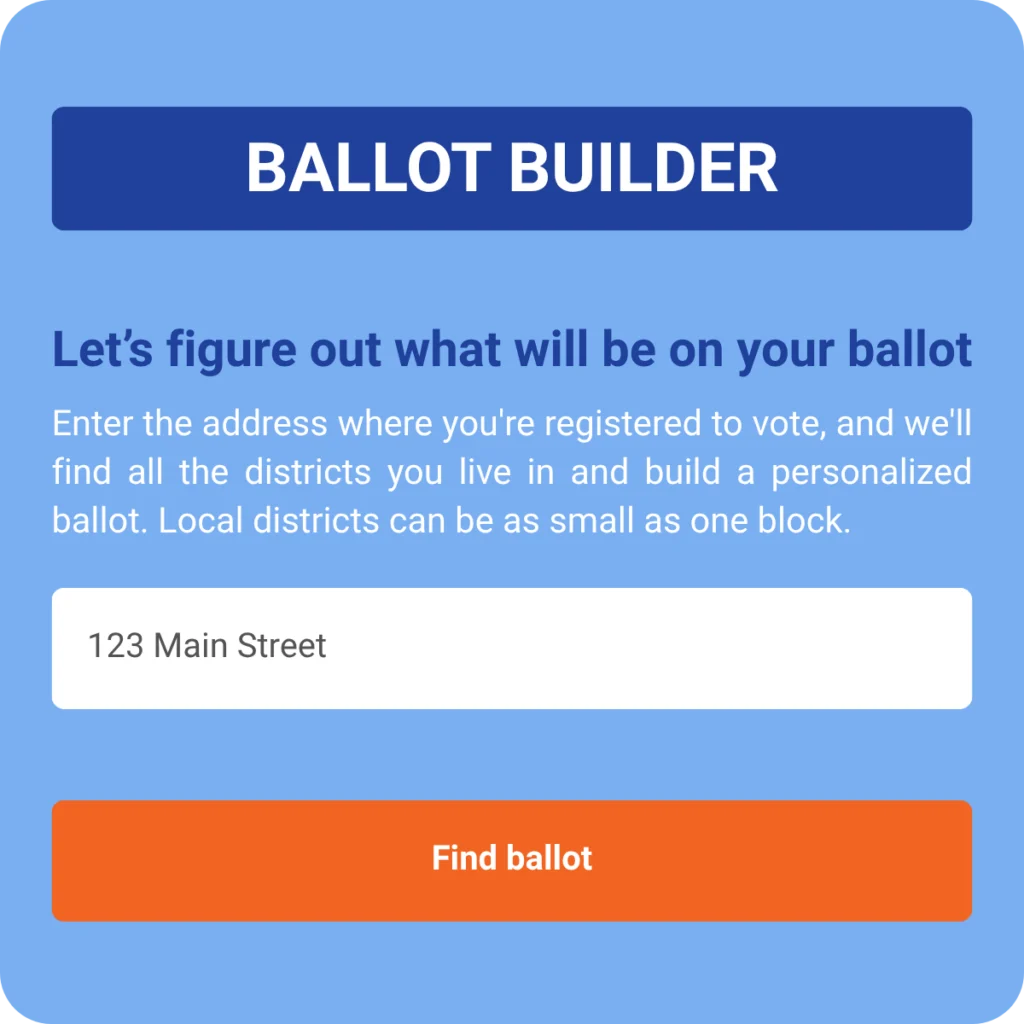
Federal and state officials set the minimum wage and benefits. They can also pass laws to regulate workplace safety, set banking standards to protect investments, provide tax benefits for businesses to create jobs, fund worker training programs, and determine paid holidays and days off.
Offices
Mayors and Council Members
County Commissioners
NC Legislature
US Senate
Public safety
Federal, state, and local officials decide how to keep the public safe. Federal leaders and the state legislature decide what is a crime and how crimes are punished. Local offices decide whether to prosecute crimes, how long a sentence will be, gun safety laws, funding for community safety programs, and more.
Offices
Mayors and Council Members
Sheriff
District Attorney
County Commissioners
District and Superior Court Judges
NC Legislature
Education
Federal, state, and local officials are responsible for funding and maintaining public education systems. Officials set the education budget and funding for each school district, set teaching standards including teacher pay and licensing, decide what is taught, who is hired, and more.
Offices
School Board Members
County Commissioners
NC Legislature
NC Supreme Court
US Senate
Reproductive rights
Federal and state officials are responsible for providing access to reproductive rights. Officials decide which options are available in your county, including prenatal services, safe childbirth and maternal care programs, abortion care, access to contraception, and more.
Offices
District and Superior Court Judges
NC Court of Appeals
NC Supreme Court
NC Legislature
US Senate
Public health
Elected officials make decisions about access to and quality of health services. Officials fund public programs to support maternal and child health, determine what type of care is given at hospitals, and regulate nursing homes and assisted living facilities.
Offices
School Board Members
County Commissioners
NC Legislature
US Senate
Climate and environment
Federal, state, and local officials are responsible for how we use and protect the environment. Officials decide rules about drinking water, air quality, how factories and farms handle hazardous waste, and can offer tax credits to businesses or households who adopt environmentally-friendly policies.
Offices
Mayors and Council Members
County Commissioners
NC Supreme Court
NC Legislature
US Senate
Civil rights
The US and NC Constitutions mandate equal protection under the law for every person. Most civil rights protections come from federal law. States and municipalities can pass additional civil rights laws and decide what punishments to impose on those who violate a person or group’s civil rights.
Offices
Mayors and Council Members
Clerk of Court
Sheriff
District Attorney
County Commissioners
District and Superior Court Judges
NC Court of Appeals
NC Supreme Court
NC Legislature
US Senate and House of Representatives
Housing
Federal, state, and local lawmakers can pass laws to protect renters from discrimination and oversee evictions. Officials can regulate banks and lenders, create tax caps for sellers and buyers, and fund public housing.
Offices
Mayors and Council Members
Clerk of Court
Sheriff
District and Superior Court Judges
NC Legislature
US Senate