Campus Voting Guide
Upcoming election dates
-
Voter Registration Deadline
October 9, 2026
Register to Vote in NCMust be registered by this date to vote on Election Day. Missed the deadline? You can still register and vote on the same day during early voting.
-
Early voting starts
October 15, 2026
Early VotingRegister and vote on the same day! Vote at any early voting site in your county!
-
Vote by mail request deadline
October 20, 2026 5:00 PM
Vote by MailRequest your ballot by 5 PM. Ballots must be *received* by your county board of elections by Election Day (no grace period in NC).
-
Early voting ends
October 31, 2026
Early VotingLast chance to use same-day registration and vote at any early voting site in your county.
-
Election Day
November 3, 2026
Election DayLast day to vote in the general election. Must be registered by voter registration deadline. Vote only at your assigned polling place. Polls open 6:30 AM to 7:30 PM. In line by 7:30 PM? You will be able to vote!
-
Vote by mail return deadline
November 3, 2026 7:30 PM
Vote by MailYour absentee ballot must be received by your county board of elections by 7:30 p.m. on Election Day.
Make your plan
The first step on your voting journey is deciding where to vote: at school or at home. Everything else — where you register to vote, the candidates and offices on your ballot, and where you go to cast your ballot — depends on this decision.
For most students, it’s easiest to vote where you will be during the early voting period and on Election Day, both of which are in the fall. Since you’ll likely be at school in the fall, it’s probably easiest to vote there.
To vote at home, you need to register at your parents address and either plan to go home to vote or request an absentee ballot to vote by mail. If your home is in North Carolina, visit Register to vote in North Carolina and Vote by mail to learn more. If your home is in another state, visit Register and Vote in Your State on the U.S. Election Assistance Commission website.
Find your addresses
- You need to know your correct residential and mailing addresses to register to vote and to learn about the candidates and offices on your ballot.
- Campus addresses can be confusing. Your residential and mailing addresses might be different. Different dorms on the same campus can have different address formats. Use our Campus Address Guide (click button below) to find your correct residential and mailing addresses. If your campus isn’t on the list, email us and we’ll add it!
- If you don’t receive mail at your residential address, make sure to include a mailing address. If you live on campus and have a mailing address different from your residential address, you can use that — but you don’t have to! Your mailing address can be any address at which you can reliably receive mail, including your parents’ address, a PO box, or even a friend’s address.
What’s on the ballot?
- Once you know your correct residential address, you can learn about the candidates and offices on your ballot and how they can influence the issues you care about.
- Ballot Builder is our nonpartisan candidate-research guide. Learn about who’s running for office and pick your favorites to create your own customized sample ballot.
- To access Ballot Builder and check out our primers on the offices and issues on the ballot, click the button to visit our What’s on the Ballot? page.
Register to vote
- Once you’ve found your correct residential and mailing addresses (see above), you can register to vote.
- Visit our Register page to learn how to register to vote in North Carolina.
- Already registered? Visit Check your voter registration to make sure your registration is up to date.
What to bring
Proof of residency (for same-day registration only)
- Voters using same-day registration during early voting should bring a proof of residency document such as a photo ID, bill, government check, or bank statement that includes your name and your registration address.
Voter ID
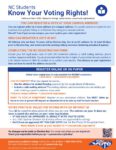
- You will be asked to show photo ID when you vote., but you can vote with or without a photo ID!
- Student IDs for many NC colleges and universities have been approved by the NC State Board of Elections for voting. View the list.
- You can also use an NC drivers license, US passport, free ID from your county’ board of elections, or other approved forms of voter ID.
- Pro tip! Your ID is about the face, not the place! The address on your ID does not have to match the address on your voter registration.
- Learn more about voter ID
Get involved
Learn more

Learn more
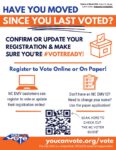
Have you moved since you last voted?
Confirm or update your registration and make sure you're #VoteReady!
Campus Playbook 2026
Educate and activate voters on your campus! Discover best practices for student voter engagement, plus strategies to mobilize student groups, faculty, staff, and campus administration.

High School and Community Toolkit
Designed to educate young voters and highlight how teachers, students, administrators, and families all play a role in civic engagement. The toolkit includes free lesson plans, activities, how-to guides, printables, and more resources to help your entire school community get involved in voting.