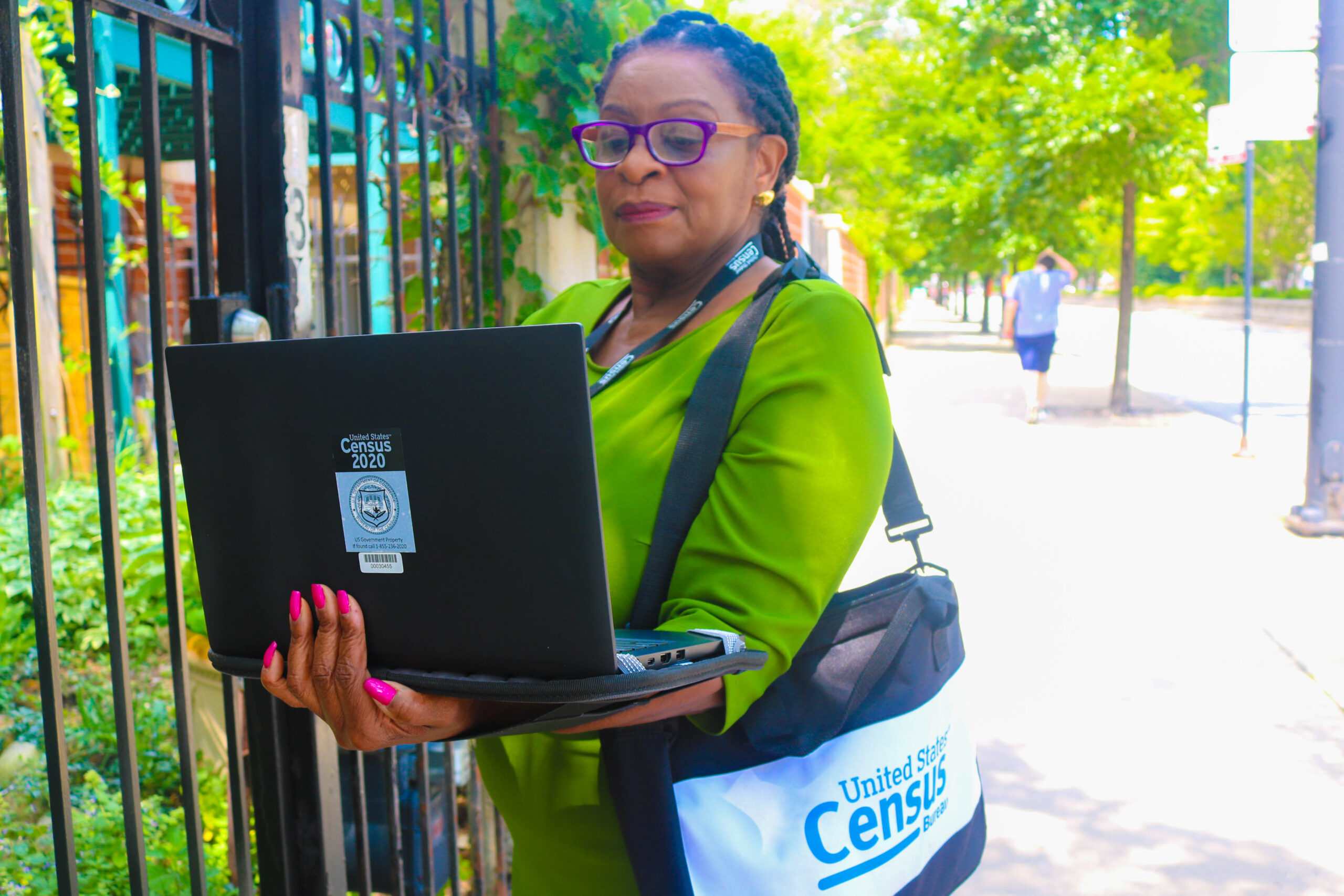
Today, more than three years from the start of the 2030 decennial census, we took our first step towards ensuring that America’s next big population snapshot accurately reflects the country, states, and communities we live in, providing the clear picture necessary for the equitable distribution of resources and political representation – and more – for years to come.
In a public comment submitted today to the U.S. Census Bureau, we urged the agency to withdraw proposed changes to the 2030 census that would eliminate entire categories of residents from the count, may discourage participation, could inaccurately determine people’s residences, and would prevent the collection of critical demographic data.
The full text of our comment and a link to the Census Bureau’s proposed changes are below.
While this is our first step towards ensuring a fair 2030 census, it will not be our last. As a member of the NC Counts Coalition, we are committed to spending the next three years doing what we can to make sure we get a census that we can count on.
Join our mailing list to stay in the loop!
Learn more
- Protect Our Count, NC Counts Coalition
- Letter to the U.S. Census Bureau, NC Governor Josh Stein
- NC demographer says census changes could be “very harmful,” NC Local
Text of You Can Vote’s comment to the U.S. Census Bureau
In response to: Decennial Census of the Population of Americans; Proposed Residence Criteria and Proposed Regulations for Demographic Questions
You Can Vote is a nonpartisan, pro-democracy, 501(c)(3) nonprofit headquartered in Durham, North Carolina. We work statewide to increase voter registration and turnout among residents facing barriers to full civic participation. We strive to create a fully representative democracy in which equality and justice are a reality for all North Carolinians.
You Can Vote opposes the proposed rule because of its potential to make our democracy less representative, less equal, and less just. The proposed changes threaten the accuracy of the census and could undermine fair political representation and civil-rights enforcement.
Excluding noncitizens from congressional apportionment (§ 60.4)
The Bureau’s proposal to exclude certain categories of noncitizen residents from congressional apportionment, including people legally residing in the U.S. without permanent resident status, would lead to an unrepresentative, undemocratic U.S. House of Representatives.
The Fourteenth Amendment requires congressional representation to be apportioned according to the “whole number of persons in each State,” not merely the number of citizens or eligible voters. Excluding residents based on immigration status undermines this principle, potentially reducing the political representation of entire communities, including the U.S. citizens who live in them.
Discouraging census participation (§ 60.4 and proposed use of administrative records)
The proposed rule could also discourage people from participating in the census. The Bureau plans to exclude certain noncitizens from congressional apportionment and is considering using government records to determine immigration status or adding a legal-status question to the census questionnaire. Fear that census information might be used for immigration enforcement could make residents reluctant to respond, including lawful permanent residents and U.S. citizens living in households with noncitizens.
A census that discourages people from participating cannot reliably fulfill its purpose of counting the population.
Inaccurate residence determinations (§ 60.2–60.3)
The Bureau’s proposal to use tax records to help establish residency could produce inaccurate population counts at the state and local levels. Tax records do not always reflect where people actually live, particularly college students – who constitute a significant portion of the population in many North Carolina communities – people with unstable housing, and other residents whose living arrangements do not fit conventional patterns.
Although § 60.3(a) of the proposed rule appears to address some concerns about counting dependent college students who live away from their parents, the absence of specific residence criteria for college students leaves important questions unanswered. In particular, it is unclear how the Bureau would determine where a student lives when their university housing, tax records, and time spent visiting their parents point to different addresses. As a result, some students could be counted in their parents’ communities rather than where they actually live while attending college. The Bureau should explain how it will resolve conflicts in these situations.
Eliminating essential demographic questions (§ 70.2)
The Bureau’s proposal to eliminate questions about race and ethnicity from the decennial census and prohibit the future inclusion of questions about sexual orientation would restrict the collection of demographic data used to identify, address, and prevent discrimination.
Race and ethnicity data are particularly important for enforcing the Voting Rights Act and evaluating whether electoral districts provide equitable representation. Removing these questions would weaken an essential source of information used to protect voting rights, as well as to identify disparities in other areas.
Urging withdrawal of the rule
The census determines much more than population totals. Its findings shape political representation and important decisions about public resources. Those decisions should be based on an accurate count of the people who actually live in our communities.
You Can Vote urges the Bureau to withdraw the proposed rule and preserve census practices that support accurate population counts, equitable representation, and effective civil-rights enforcement.
More news
- Keep the 2030 census accurate and equitable
 Today, more than three years from the start of the 2030 decennial census, we at You Can Vote took our first step towards ensuring that America’s next big population snapshot accurately reflects the country, states, and communities we live in, providing the clear picture necessary for the equitable distribution of resources and political representation – and more – for years to come.
- North Carolina Voting History Timeline
 Exploring North Carolina’s voting rights history reveals a story of discrimination, obstacles, and progress. From battles for civil rights to key elections, each part of this history shows why it’s crucial to vote.