Am I voting this year?
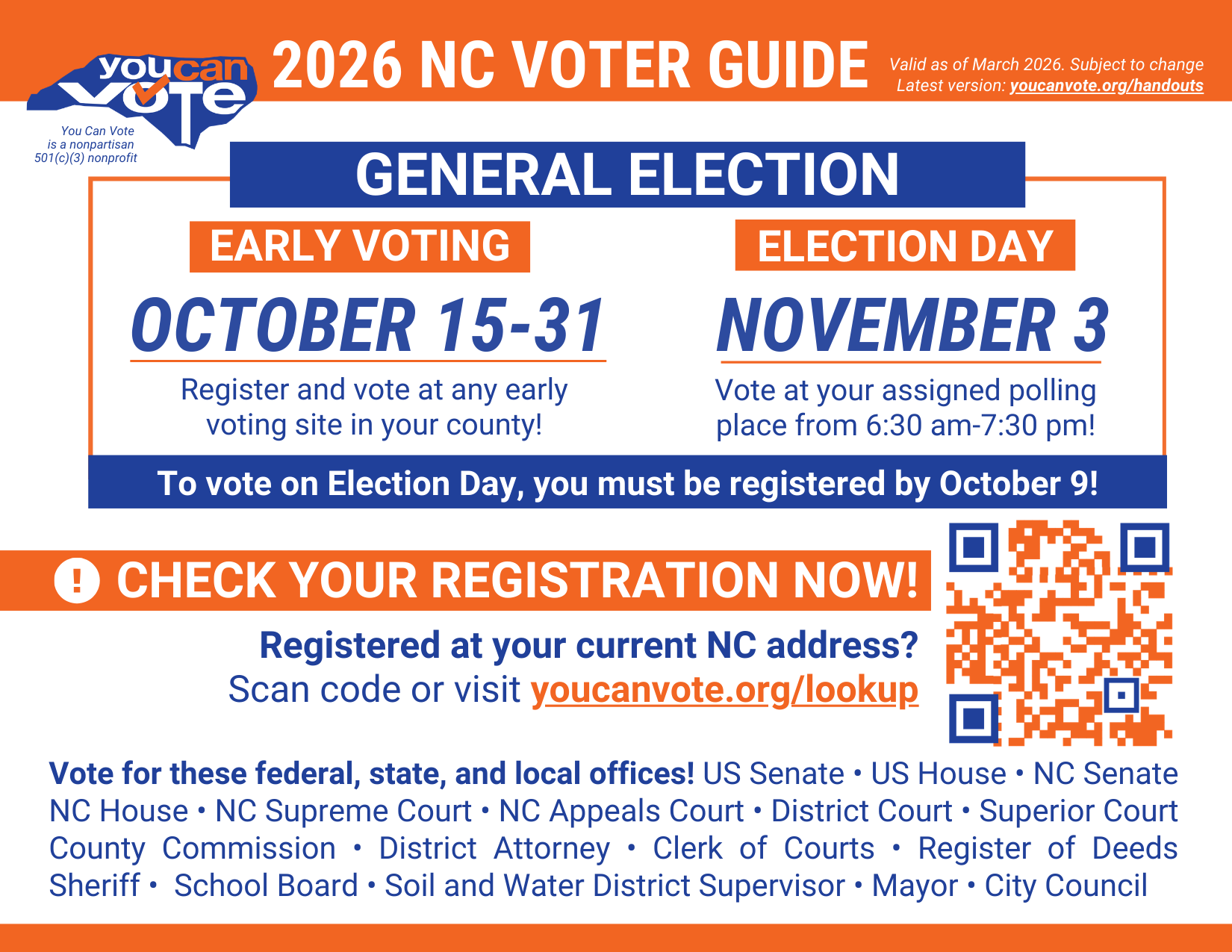
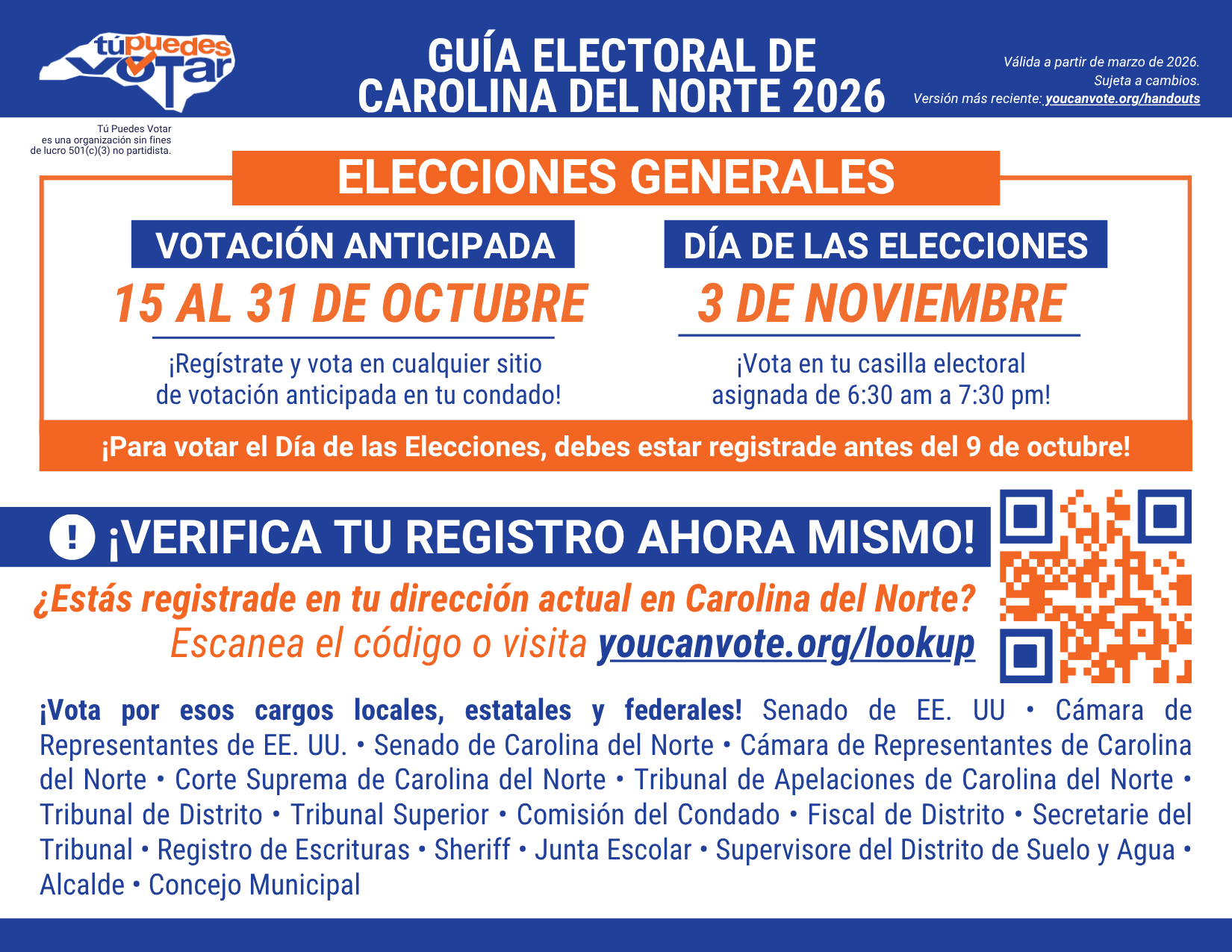
All eligible North Carolina voters can cast a ballot in the 2026 general elections! Federal, state, and local offices are up for election — including one of NC’s U.S. Senate seats, NC’s entire delegation to the U.S. House of Representatives, our entire state legislature, a seat on the NC Supreme Court, county school boards, mayors, and city councils. Scroll down to learn more about what’s on the ballot this year.
What’s on the ballot in 2026?
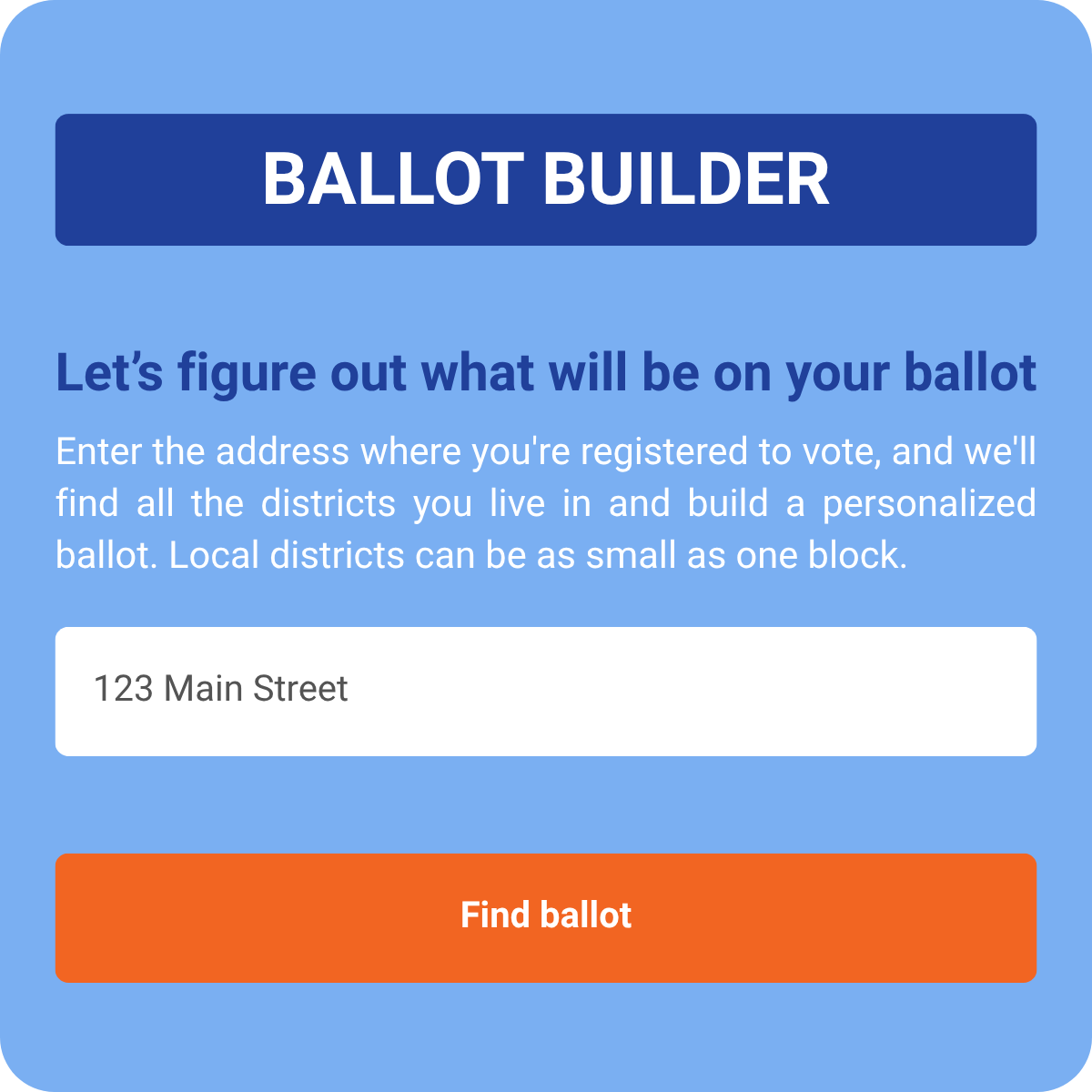
Ballot Builder
You can vote with confidence and insight thanks to Ballot Builder, our free, nonpartisan elections research guide.
Learn about the candidates and offices on your ballot.
Select your preferred candidates to create your customized sample ballot.
Email or print it and bring it with you into the voting booth.
Make sure to create an account! Creating an account let’s us email you when new candidate research is available.
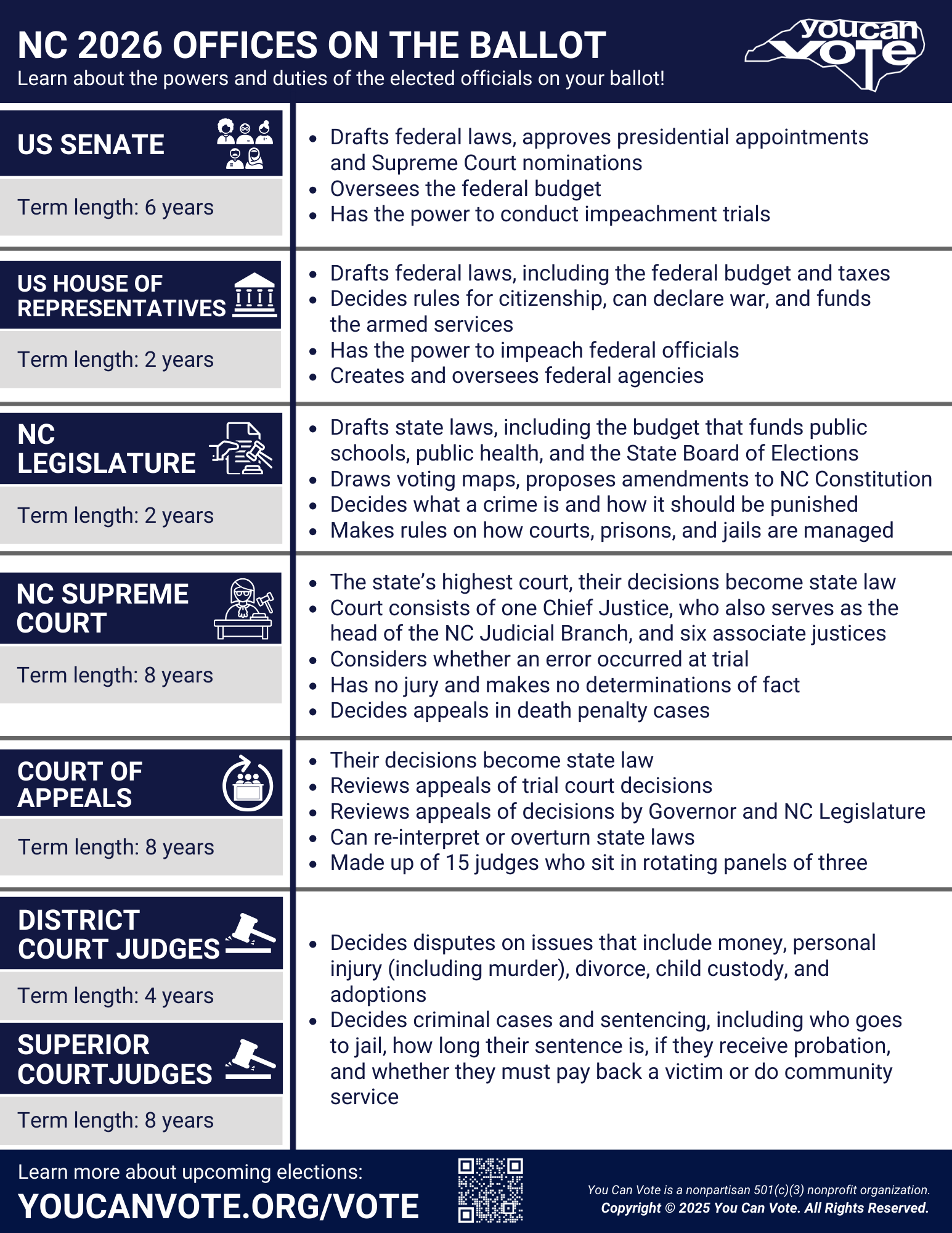
Offices on the ballot
Federal offices
-
The US Senate drafts federal laws, approves presidential appointments and Supreme Court nominations, oversees the federal budget, and has the power to conduct impeachment trials.
-
The US House of Representatives makes federal laws including the budget and rules for citizenship and can declare war and regulate the armed services. Creates and oversees federal government agencies.
State offices
-
The General Assembly, North Carolina’s legislature, writes state laws and the budget which funds public schools, public health, and the State Board of Elections. They draw voting maps and write election laws for our state. They decide what is a crime and how it should be punished and make rules on how courts, prisons, and jails are managed.
-
The Supreme Court of North Carolina makes rules for NC appellate courts, decides cases from lower courts when someone claims that the law was misapplied, and decides appeals in death penalty cases.
-
The Court of Appeals reviews trial court decisions that are appealed. Has judicial review power over the Governor and NC Legislature and can interpret or overturn state laws. Their decisions become law.
-
District and Superior Court Judges decide disputes on issues that include money, personal injury (including murder), divorce, child custody, and adoptions. They decide criminal cases, who goes to jail and for how long, if someone receives probation, and whether someone must pay back a victim or do community service.
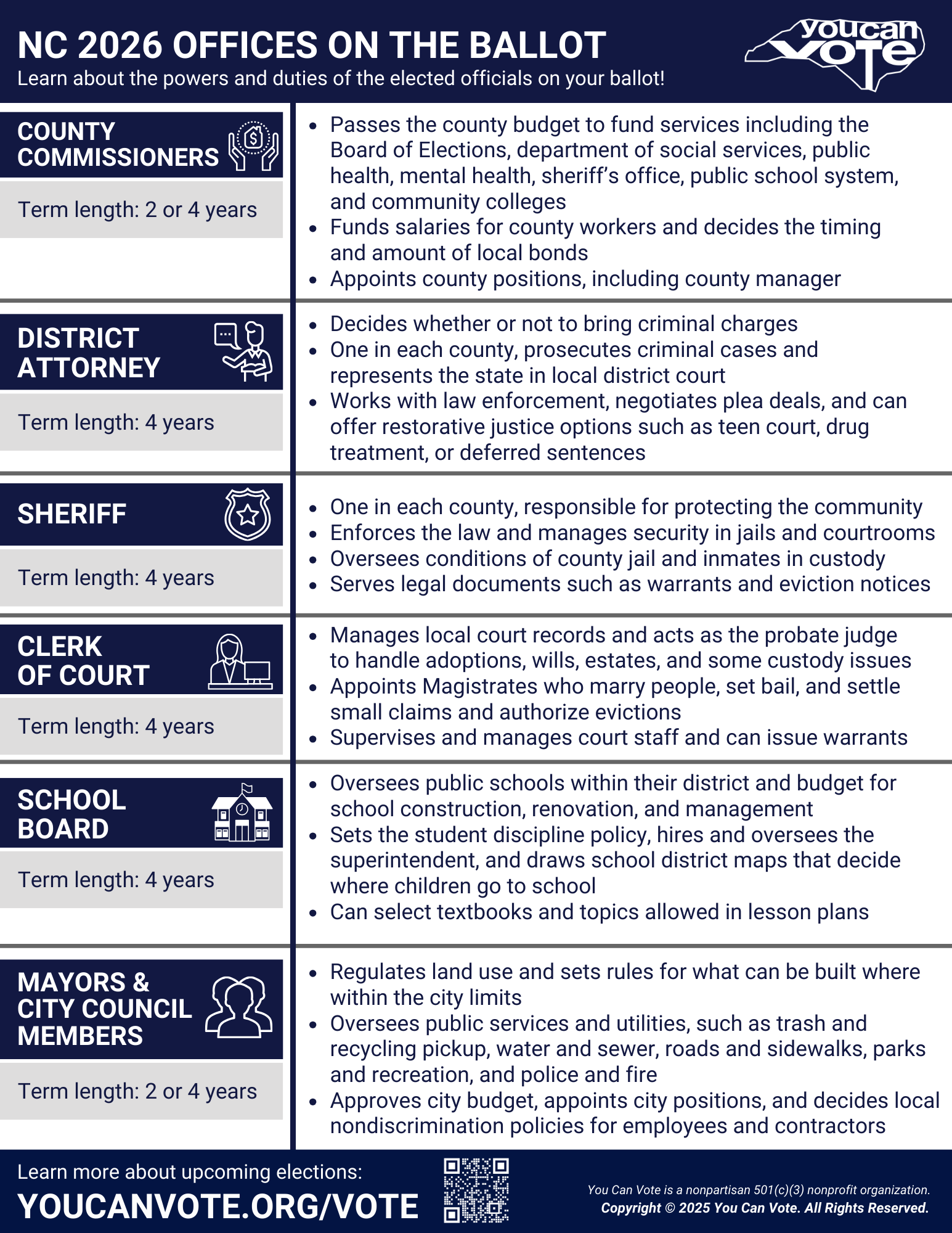
Local offices
-
Mayors and Council Members decide what can be built where, provide public services and utilities such as trash and recycling pickup, water and sewer, roads and sidewalks, parks and recreation, and police and fire. They also decide local equal employment opportunity and nondiscrimination policies for employees and contractors and appoint city positions.
-
County Commissioners pass the budget that funds services including the County Board of Elections, public health, safety, law enforcement, human services, public schools, and community colleges. They fund salaries for county workers and decide the timing and amount of local bonds. The Board appoints county positions including the tax supervisor, tax collector, and county attorney.
-
School board members are in charge of public schools within the district and approve and fund school construction, renovation, and management. They set the student discipline policy, hire and oversee the superintendent, and draw school district maps that decide where children go to school. They can select or restrict textbooks or topics allowed in lesson plans.
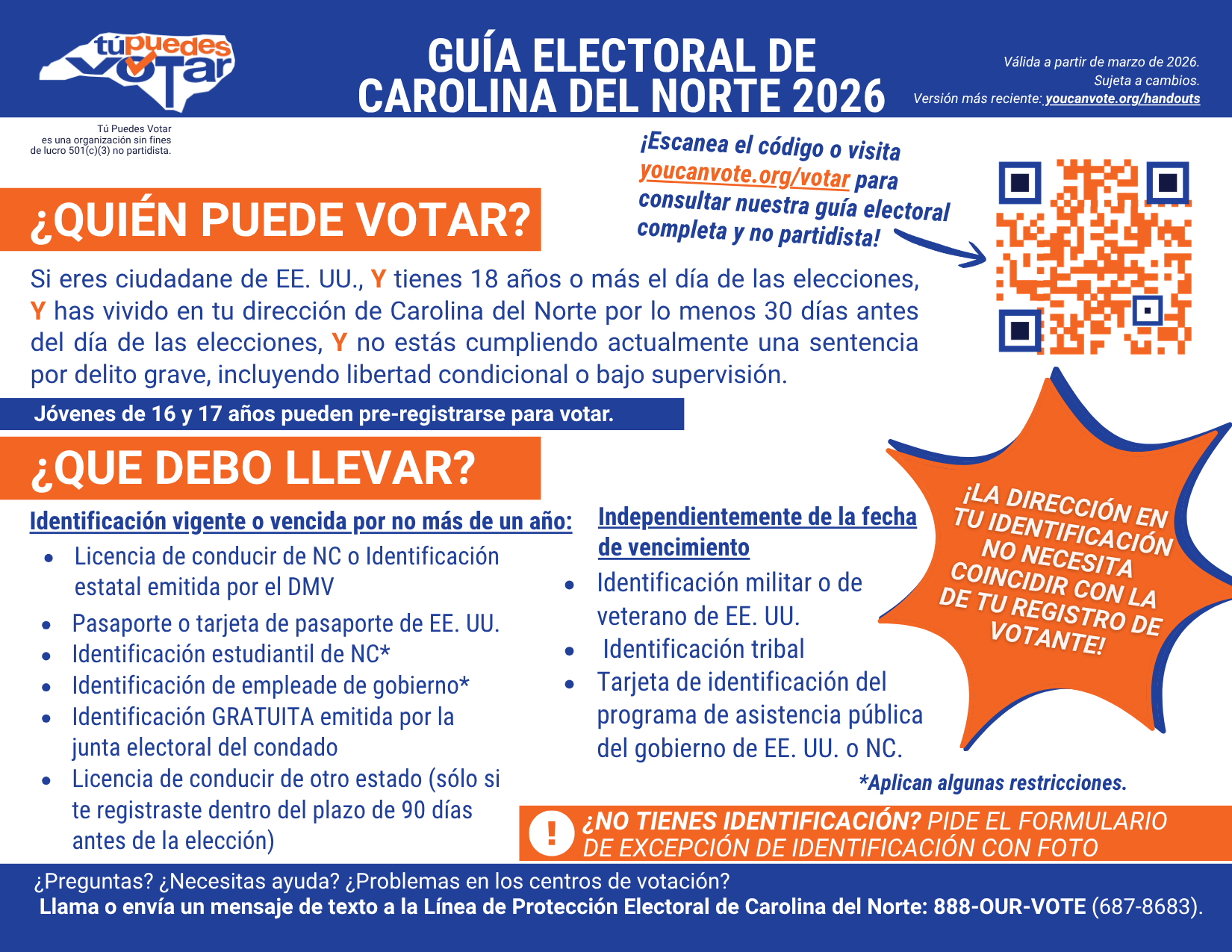
Register
Get registered
Visit our Register to Vote page to learn everything you need to know about registering to vote in North Carolina.
Check your registration
Use the Voter Search tool on the NC State Board of Elections website to make sure your registration is accurate and up to date.
Registration Repair
You may need to submit additional info to the State Board of Elections to ensure you can vote with a regular (non-provisional) ballot in the next election.
3 ways to vote in NC
North Carolina voters have three ways to cast their ballots. Learn more about each way and decide which is best for you!
Early voting
Best option! Register or update your registration and vote at the same time! Vote at any early voting site in your county. Changes to party affiliation cannot be made during early voting in a primary election.
Election Day voting
Next best option! Vote at your assigned polling place. Your polling place can change for every election. Find your polling place.
Vote by mail
To vote by mail, request your absentee ballot from the NC State Board of Elections. You must be registered to vote in North Carolina. Click the button to learn more.

Voter ID
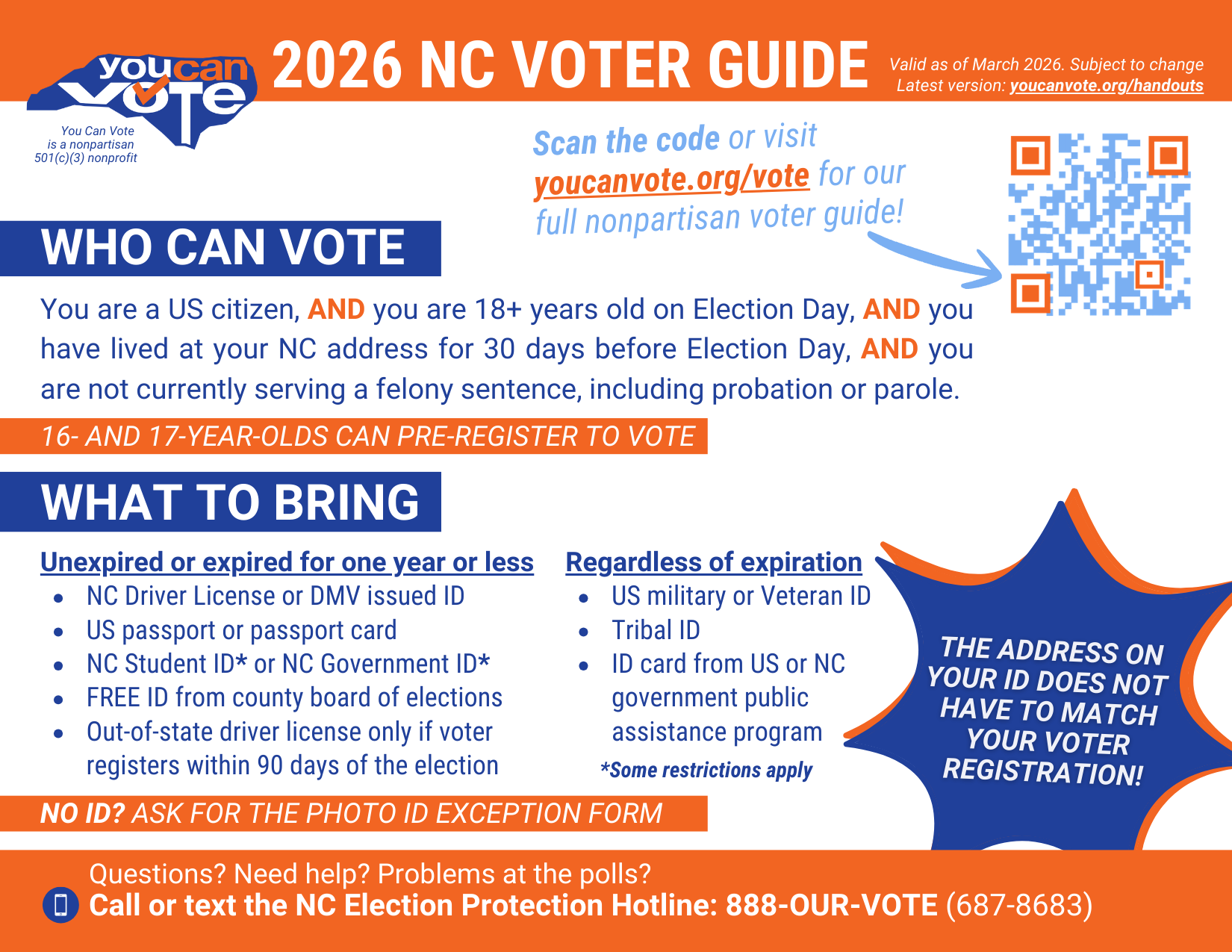
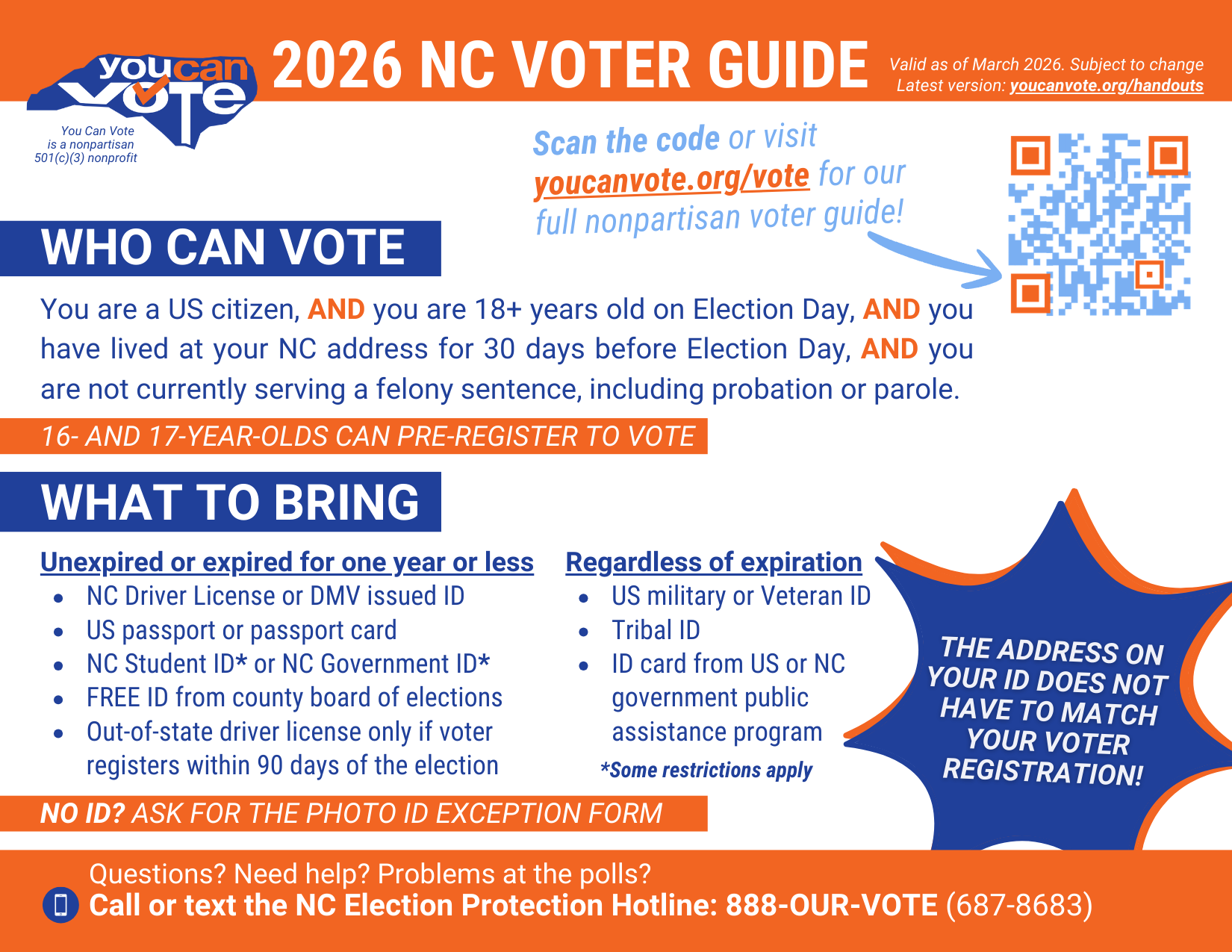
All voters will be allowed to vote with or without a photo ID!
If you have an ID, bring it with you to vote.
If you don’t have an accepted ID, ask for the Photo ID Exception Form when you go to the polls. Your ballot will count if you properly complete the form.
To learn more, click the button to visit our Voter ID page.
Get help voting
Any voter can ask a family member to help them vote. If a voter has a disability or does not speak English, they can ask anyone (other than their employer or union representative) to help them vote. The helper must put their name on the list of helpers at the polling place.
Curbside voting is also available for voters who are unable to get inside the polling location. Learn more from the State Board of Elections.
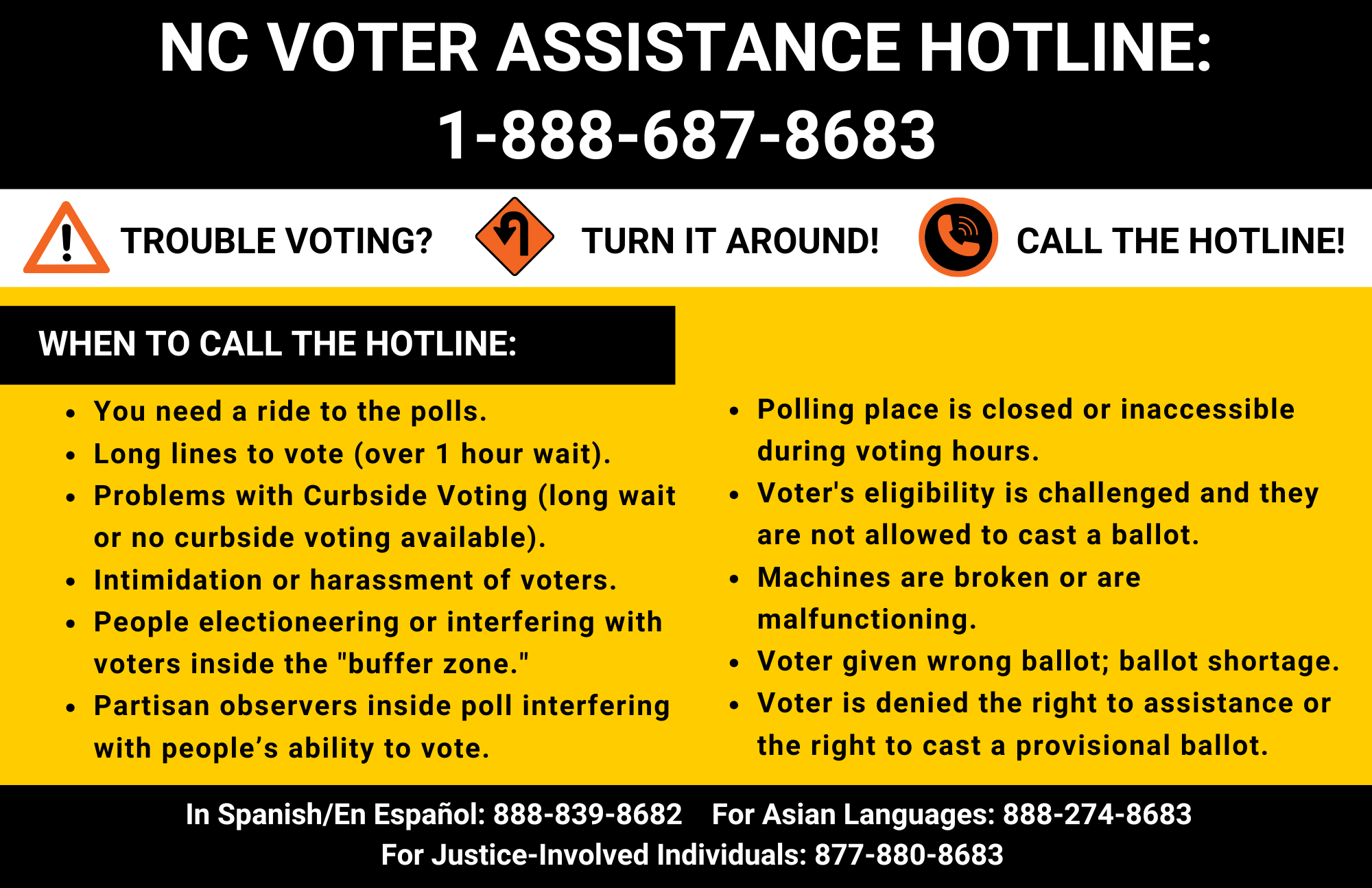
If you encounter difficulties at a polling place, or if you have questions, call the NC Voter Assistance Hotline at 888-OUR-VOTE (888-687-8683).
More
Want to share this information? Visit our handouts page for printable election handouts or download our voter education toolkits.